
Risk Management for Volatile Markets: Why Advisors Need Dynamic Hedging Strategies


The Problem: Drawdowns Trigger Client Exits—and Outdated Models Fail
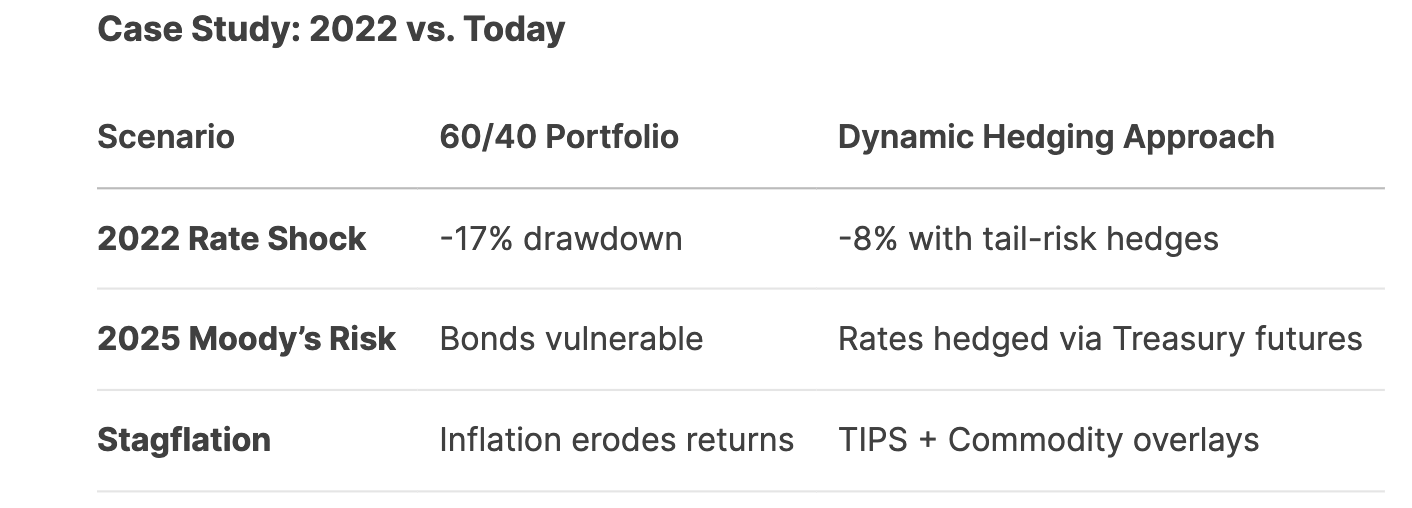
The 2022 market collapse was a wake-up call. The traditional 60/40 portfolio—long considered the gold standard for balanced risk—suffered its worst year in decades, with bonds and stocks falling in tandem.
Now, with Moody’s recent U.S. credit downgrade, stagflation risks rising, and interest rate volatility persisting, advisors face a critical challenge: clients panic during drawdowns, leading to costly exits at the worst possible time.
Why Static Strategies Fail in Today’s Market
The 60/40 Breakdown
In 2022, both equities and fixed income fell simultaneously, eroding diversification benefits. Bonds, traditionally a hedge, failed as rates spiked.
Stagflation (high inflation + stagnant growth) further exposes this flaw, as seen in the 1970s.
Moody’s Downgrade Adds Systemic Risk
The U.S. credit rating cut to Aa1 signals fiscal instability, potentially raising long-term Treasury yields and volatility.
Advisors relying on Treasuries for "safe" allocations now face reinvestment risk and duration traps.
Client Psychology = Performance Killer
Behavioral finance shows clients sell at lows after steep losses. A 20% drawdown can trigger irreversible damage to long-term returns—and your practice’s retention.
The Solution: Dynamic Hedging for Adaptive Risk Management
Static portfolios can’t respond to real-time shocks. Instead, dynamic hedging adjusts exposures as markets shift, acting as a "shock absorber" for client portfolios.
Actionable Steps for Advisors
Stress-Test Portfolios
Model 1970s-style stagflation or a 5% Treasury yield spike. Does the 60/40 still hold? (Hint, Likely not)
Educate Clients
Frame hedging as "insurance," not speculation. Show 2022’s lessons and Moody’s implications.
Partner with Specialists
Outsourced hedging and tactical strategies to implement strategies at scale.
Many good tactical strategies have the advantage of of using rules-based processes thus eliminating the requirement to becoming a “bond expert” and running the risk of making emotional decisions.
Bottom Line
The 60/40 is not dead—but it’s dangerously incomplete. With Moody’s downgrade amplifying macro risks, advisors should consider adopting dynamic hedging to:
Reduce client panic by capping drawdowns.
Exploit opportunities (e.g., rate cuts, stagflation trades).
Differentiate your practice as proactive, not reactive.